The trigger or stimulus for thyroid hormone release comes from the brain. The hypothalamus (a small but vital gland in the brain which regulates many bodily functions) releases thyroid-releasing hormone (TRH) mainly in response to lower levels of thyroid hormone in the blood as well as several other factors.
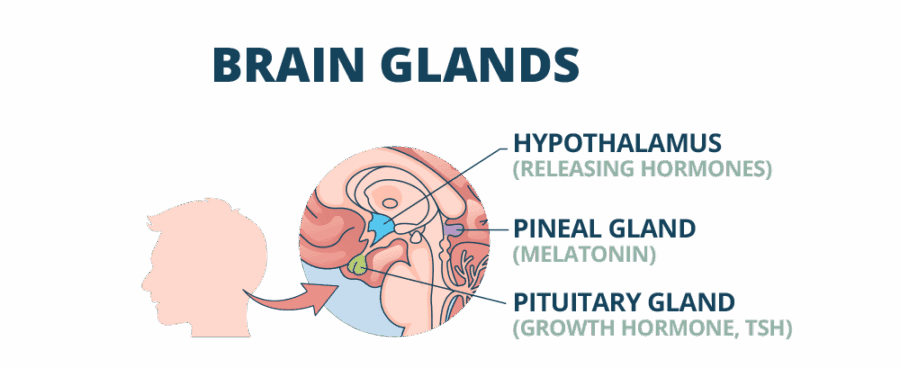
TRH acts on the nearby pituitary gland in the brain which in turn releases thyroid-stimulating hormone (TSH). TSH travels in the blood to act on the thyroid gland. The thyroid gland responds by absorbing iodine from the blood stream and combining it with the hormone pre-cursor thyroglobulin contained in the thyroid follicles. This is why a lack of dietary iodine in some parts of the world is related to larger thyroid glands, as the thyroid enlarges to absorb more iodine to make sufficient thyroid hormone.
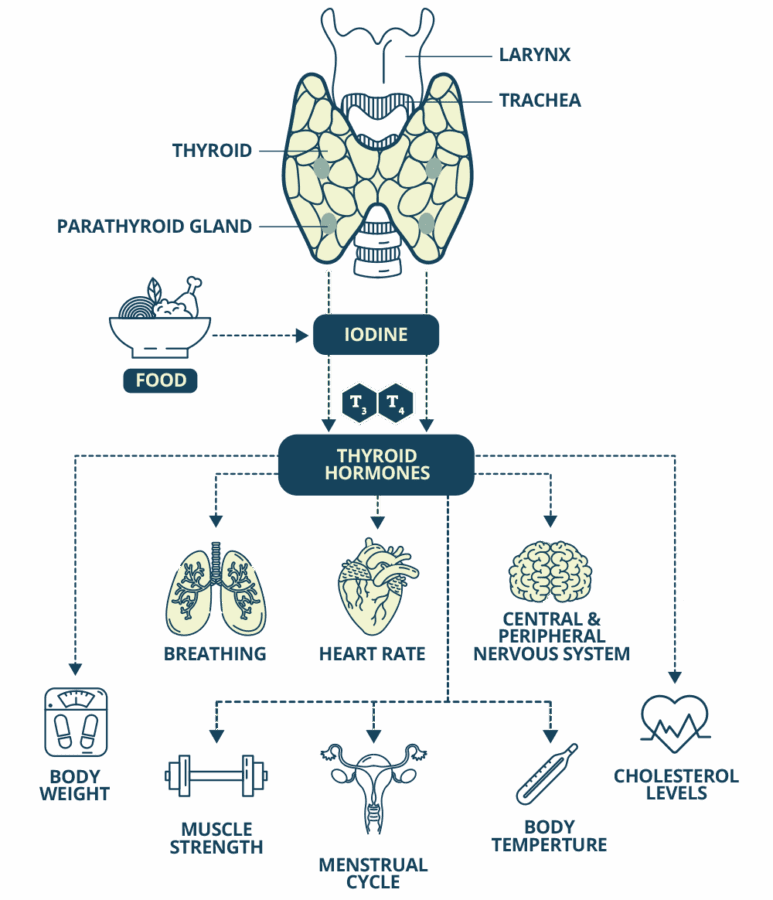
Two types of hormone are produced. The thyroid gland produces around 80% to 90% “T4” (thyroxine) and only a small amount of “T3” (triiodothyronine). T4 is a long-lasting storage form of hormone and T3 is the more active form of hormone. Thyroid hormones travel to and affect almost every cell in the body to regulate functions such as the cardiovascular function, nervous system, liver function, growth and reproduction. Many other organs can convert T4 (the less active form of thyroid hormone) to active T3 such as the liver, kidneys, heart and brain for local use. Broadly speaking thyroid hormones plays a key role in metabolism, how effectively the body uses energy and repairs tissue.
Finally, when the hypothalamus detects sufficient or excessive hormone in the blood, thyroid releasing hormone (TRH) production and thyroid stimulating hormone (TSH) levels are reduced or stopped to maintain thyroid hormone in a normal range. This process of maintaining balance is called homeostasis. In the presence of any condition causing excess thyroid hormone production (hyperthyroidism) this system is switched off (detected in the blood as abnormally low or suppressed TSH levels). If the thyroid gland cannot produce sufficient hormone or is removed, thyroid hormone supplementation is required to maintain vital bodily functions. Persistent low thyroid function (hypothyroidism) is characterized by abnormally high levels of TSH if left untreated.