The thyroid gland is one of several endocrine organs that work together as the endocrine system. Endocrine organs help regulate wide ranging bodily functions and are characterized by their ability to release hormones in response to signals from the brain and their local environment. Hormones are chemical messengers carried in the blood to produce an effect elsewhere in the body by acting on other organs and tissues.
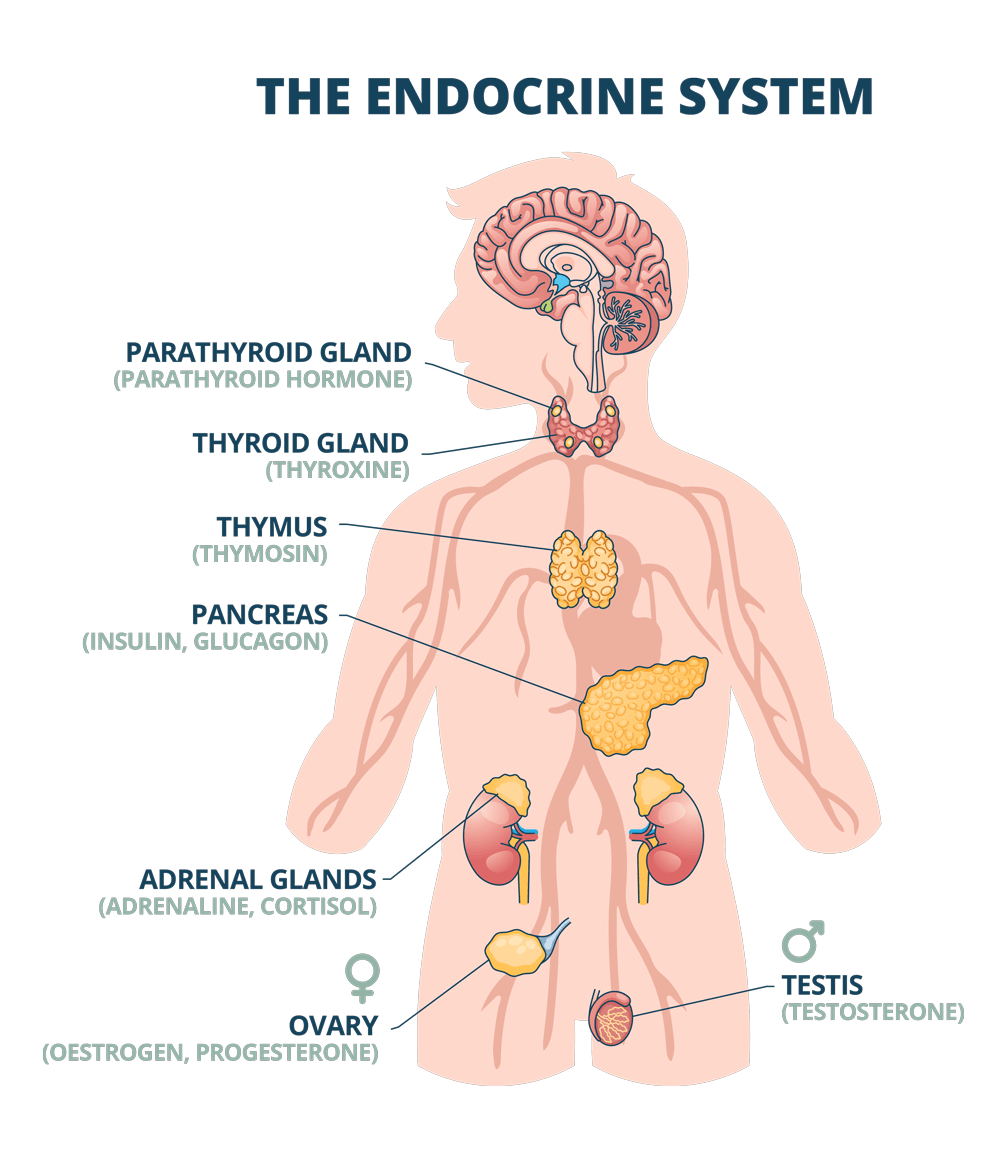
Endocrine organs play a vital role in almost every body system from the pancreas which releases insulin to regulate blood sugar to the ovary and testes releasing sex hormones involved in growth and reproduction. Glands within the brain (the hypothalamus and pituitary gland) work together to constantly monitor hormone levels in the blood and also receive other “neural” inputs from the brain to orchestrate the endocrine system. These glands release hormones themselves to regulate how much hormone other endocrine glands produce. This complex system maintains a balanced environment in which the body can function at its best.
The thyroid gland sits at the front of the neck and plays a pivotal role in how the body uses energy. This means it has far reaching roles in metabolism and energy regulation (how effectively we convert food to energy and use that energy). This in turn helps regulates many vital functions including temperature control, heart rate and our perceived energy levels. This is why symptoms of thyroid dysfunction can manifest in so many ways. Thyroid overactivity (hyperthyroidism) can cause symptoms of palpitations, sweats and weight loss. In contrast thyroid underactivity (hypothyroidism) can cause a lack of energy, coldness and weight gain to name a few issues.