
Thyroid Assessment
Thyroid assessment:
There are several aspects to thyroid gland and thyroid nodule assessment.
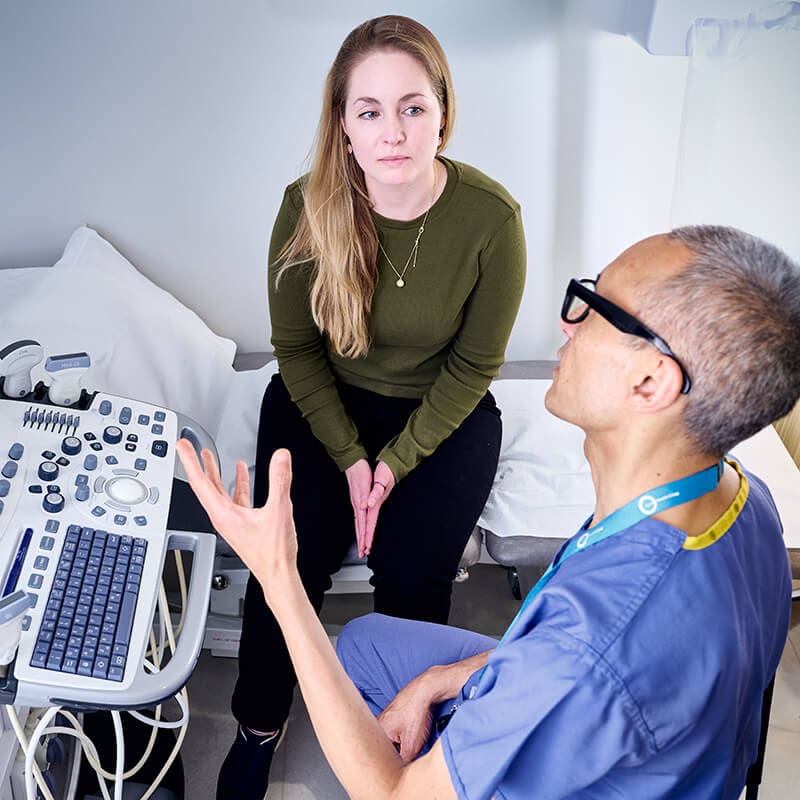
The consultation:
A detailed history is the first step in any assessment to determine the need and if relevant the suitability for various thyroid treatments. It is an opportunity for patients to ask questions and understand all their options, their advantages and limitations:
There are several important areas of enquiry which include:
- The type of symptoms or cosmetic issues and their severity.
- Investigations and tests which have been undertaken to date
- Other health conditions and medications
- Determining any possible contraindications to treatments being considered.
Ultrasound and other imaging techniques
An ultrasound of the neck is the single most important imaging investigation. It allows an accurate assessment of the gland, grading of nodules and assessing size and suitability for the various treatment options. Sometimes neck lumps are related to other structures outside the thyroid gland and ultrasound is particularly helpful in identifying any lymph gland enlargement that may require further investigation.
If thyroid nodules are very large they can extend behind the breast bone and in to the chest. This is called retrosternal or sub-sternal extension and in these cases ultrasound cannot assess for the extent of tissue. These patient will undergo either a CT scan or MRI to make a more accurate assessment and allow treatment planning.
Another imaging investigation that might be required is a thyroid uptake or isotope scan. These tests involve either ingesting a capsule or injection containing a radio-active tracer. This tracer is taken up preferentially by active or hot nodules. These studies are normally requested when blood tests reveal hyperthyroidism and a hot nodule (also called an autonomously functioning thyroid nodule) is suspected.
Fine needle aspiration (FNA)
Some nodules based on their ultrasound appearance warrant further assessment with a simple needle test or FNA. An FNA is always routinely undertaken before thyroid RFA procedures to help provide additional reassurance that a nodule is benign (non-cancerous) and therefore safe to treat. An FNA involves passing a very fine needle in to the nodule under ultrasound guidance with or without local anaesthetic. The needle is gently agitated to help draw up cells from the nodule. The needle is normally passed in to the nodule 3 or 4 times in a single FNA test to ensure an adequate sample has been acquired. The samples are spread on slides and sent for cytology testing where a specialist (cytopathologist) interprets the sample. The procedure is very safe but could result in some mild bruising or discomfort which normally settles in a day or two. The main issue with FNA is the possibility of a non-diagnostic or inadequate sample being acquired and the test has to be repeated. This can occur in up to 20% of FNA samplings.
Blood tests
The main thyroid function test is Thyroid stimulating hormone (TSH). If the TSH level is normal then thyroid function is considered normal and it is not normally necessary to test for individual thyroid hormones. If the TSH is elevated this indicates thyroid underactivity or hypothyroidism (the body is producing more TSH to encourage the gland to produce more hormone). If the TSH is low or suppressed this indicates thyroid overactivity or hyperthyroidism (the body is reducing TSH production as there are already high levels of circulating hormone in the blood). If the TSH is abnormal most laboratories will also then measure the levels of circulating thyroid hormones (free T4 and sometimes free T3). There are several other blood tests that endocrinologists (specialists in thyroid function) will use to narrow down the cause of abnormal thyroid function tests including the presence of thyroid antibodies.
Nasoendoscopy
Nasoendoscopy is a simple test performed by ENT (ear nose and throat) specialists to assess the larynx (voice box) and confirm normal vocal cord movement. A fine flexible camera is passed through the nose. This is a particularly important test if there is a history of voice change or when previous neck surgery has been performed and further interventions are being considered.
All your Thyroid Nodule questions answered...
"*" indicates required fields